Showing posts with label Liberty. Show all posts

Monday, April 7, 2014

Les Miserables on revolution: An Anarchist Review

Can you hear the people sing, singing the songs of angry men, that is the music of a people who will not be slaves again!  - From Can You Hear the People Sing in Les Miserables

Here they talked of revolution
Here it was they lit the flame
Here they sang about tomorrow
And tomorrow never came
Oh my friends, my friends, don’t ask me
What your sacrifice was for
Empty chairs and empty tables
Where my friends will sing no more
-From Empty Chairs and Empty Tables in Les Miserables


Les Miserables is a fantastic tale of love and loss, justice and mercy, revolution and power. It has enchanted and inspired millions. The interplay of personal stories interwoven into the grand story of the failed French Revolution of 1832 is fantastic. There are so many applicable topics The Anarchist Review could cover in this story: religious freedom versus political freedom or Justice versus mercy, but I have chosen the topic of revolution.

Multiple questions are brought up by this tale: What is Revolution? Who starts revolutions? What is Revolution good for?


A little background on Victor Hugo, the author, and why he wrote about this. Hugo personally witnessed some of the proceedings of the 1832 revolution or June Uprising as it is referred to. As in the play/book/movie, the uprising lasted only two days: from June 5 to June 6. It was in fact a pretty minor blurb, especially considering the large number of uprisings and revolutions that France has been through. If it were not for Victor Hugo this uprising of 3,000 people, would have faded into the annals of history known by only to a few erudite historians. 

Thanks to Hugo, however it is one of the most well-known events in history. Hugo himself was a Republican, and strongly sided with the republican revolutionaries.

Now to the tale of revolution. During the song Red and Black, Enjolras, the revolutionary leader, asks if revolution is “simply a game for rich young boys to play?” He says (or rather sings) this at the ABC pub where wealthy middle-class men come to discuss politics. Most are young, some are sons of aristocrats. These young men feel they are liberating the poor from oppression and “They will come one and all. They will come one and all” to support them in their just cause. However, their prediction is fatally wrong.

Revolution is often assumed to start with poor disgruntled workers who rise up to shake off the shackles of their oppressive governments. Yet Les Miserables is saying the opposite, that it is a bunch of wealthy middle class men who get angry and try to stir up the masses. 

So what is the revolutionary story? As one who has considered tattooing, “Liberty or Death” across his back, it would be nice to sympathize with revolutionaries. Perhaps, however, the story of Les Miserables has lessons, particularly for young fire-brands like me.

So without further ado, The Anarchist Review takes a quick plunge into the history of revolutions to uncover the truth.


Revolutions generally go through three stages, the fall of the old regime and rise of a moderate regime based on the old paradigm just adjusted, rise of a radical (and often tyrannical) government, and a return to moderate in the so-called Thermidorian reaction. Crane Brinton notably analyzed this in his book The Anatomy of Revolution. Though it is not a perfect fit for all revolutions, many of the large revolutions in history have followed this pattern, most notably the English, the French, and the Russian.

Brinton points out that it is not the super poor who start revolutions. Genuine lower-class revolutions are almost non-existent with the notable exception of Haiti’s slave revolution. The revolutionaries are generally idealistic middle-class white guys, “born of hope,” as Brinton puts it.


In the first stage, the moderate stage, the relatively unorganized middle-class men who have gained support of the lower-classes often because of extreme conditions are able to take down the first regime. This is the exciting stage where the lower-classes are involved. They are not the instigators, but they jump on the cause, mostly because they assume things cannot get worse than the status quo.  This group often is unorganized and lacking a strong leader, they often do not want to completely oust the former government as much as they simply want to change it. In France this meant forming a constitutional monarchy. They wanted to keep the king, just add restraints and grant more power to the middle-class. After all it is a middle-class revolution, the poor are involved in creating chaos, but when the tables come out and negotiation begins, they are not present.

The next stage is where an organized radical group with a strong leader sweeps in and takes control. In England it was Oliver Cromwell, in France, Robespierre, in Russia, Lenin.  Are these men from humble backgrounds who strive to help their fellow poor brothers? Let us have a look:

Oliver Cromwell: He was born into the middle-gentry, i.e. upper-middle class. He was a land-owner and politician for most of his life. Not exactly what we would consider a “worker.”

Robespierre: A politician and lawyer descended from lawyers. Robespierre, despite being from a somewhat troubled home (born out of wed-lock), he was just about as middle-class and white-collar as they come.

Some revolutionary spirit during Robespierre's Reign of Terror

Lenin: He was born to nobility. Yes, you read that right, Lenin, the Marxist radical of Russia was born into a noble family. It is not true that his parents were not born noble, however they were born rich. Before Lenin was born they were basically awarded a title and became “hereditary nobility.” Lenin, like so many Marxists, knew more about the plight of finding a good chef then they did about the plight of workers.

This is not meant to be an exposé or surprising revelation. These men are not really considered great men of history. All three were at the helms of extremely violent and bloody regimes. But they fit the bill of the radical revolutionaries of the world. Men with great idealistic visions which when attempted to put into practice end up killing loads of people. For example, Robespierre’s short rule in France led to over 40,000 deaths.
After the radical stage there is a return to a moderate stage, and often, in the long run a return to the former government. In France and England a King was returned to the throne (albeit with constitutional restraints), and Russia, well Russia still has the sort of strong dictatorial leaders it has head since the time of the Russian empire.

Revolutions results? Day to day life of workers ends up being basically the same. Religions and habits remain unchanged. As Brinton says, “[The revolutions’] results look rather petty as measured by the brotherhood of man and the achievement of justice on this earth. The blood of the martyrs seems hardly necessary to establish decimal coinage." Basically in the end the revolutions are, like most wars, fights between rich people about who can exploit who, with the lives of poor people often being tossed around as collateral. A few of the rich kids playing the revolutionary game die as symbols, but most of the blood shed is the blood of workers whom the revolution is supposed to benefit. The Reign of Terror in France which was meant to uproot all royalist support, killed far more people from the lower classes then it did nobility or royals. 

From looking back at history it seems Victor Hugo had revolutions about right. One of two things happens. The middle-class revolution gets support from the lower-classes and causes chaos and uprising. The government changes three or four times and ends up basically how it started. The other possible scenario is the one told by Hugo. The lower-classes do not come to support the cause because of misjudgment of how bad their plight actually or unwillingness to die for the cause. In either case if you start the revolution you probably end up dead with your friends wondering what your sacrifice was for.

Here at The Anarchist Review we have plenty of revolutionary blood. Those that know me know I am anti-establishment and idealist. Lots of people probably assume I would be the first one running down the street waving a Gadsden flag to start the next American revolution.

However, I have to side with history. Revolution in the end is a game for rich white boys to play which almost always ends in meaningless violence. It is a bunch of rich kids who look at the lower-classes and say, “I know what they need.” When in reality they care more about aggrandizing themselves, then helping the poor. They have grandiose ideas not rooted in reality. They claim to fight for liberty when in the reality they are seeking power.  Outside of the American Revolution, it is difficult/impossible to find a revolution which could be remotely described as “successful.”

Despite all my fiery gusto for change and revolution, I am afraid it is the slow gradual changes that win out. Why? Because people are gradual changers, society changes gradually. And while government is not society (a common error); government, at least partially, reflects society. Ultimately government only changes because it has to. Society changes government, it is impossible to do it the other way around. People, not power, rule the world. So despite my radical leanings and position, I feel I must give deference to that great conservative thinker Edmund Burke who predicted the French Revolution spiraling out of control.

“It is a general popular error to suppose the loudest complainers for the public to be the most anxious for its welfare.” – Edmund Burke


My suggestion for young men like me who so greatly yearn for change in the world is not to turn to guns, violence, and revolution, but rather to reason and technology, thinking and persuasion, that is how we will win the war.

Do not go start political revolution. Stay home, get married, have children, raise them peacefully, write a book, and live another day.

 If we go the path of revolution we will end up like those of Les Miserables, with “empty chairs and empty tables, where [our] friends will sit no more.”


Monday, February 17, 2014

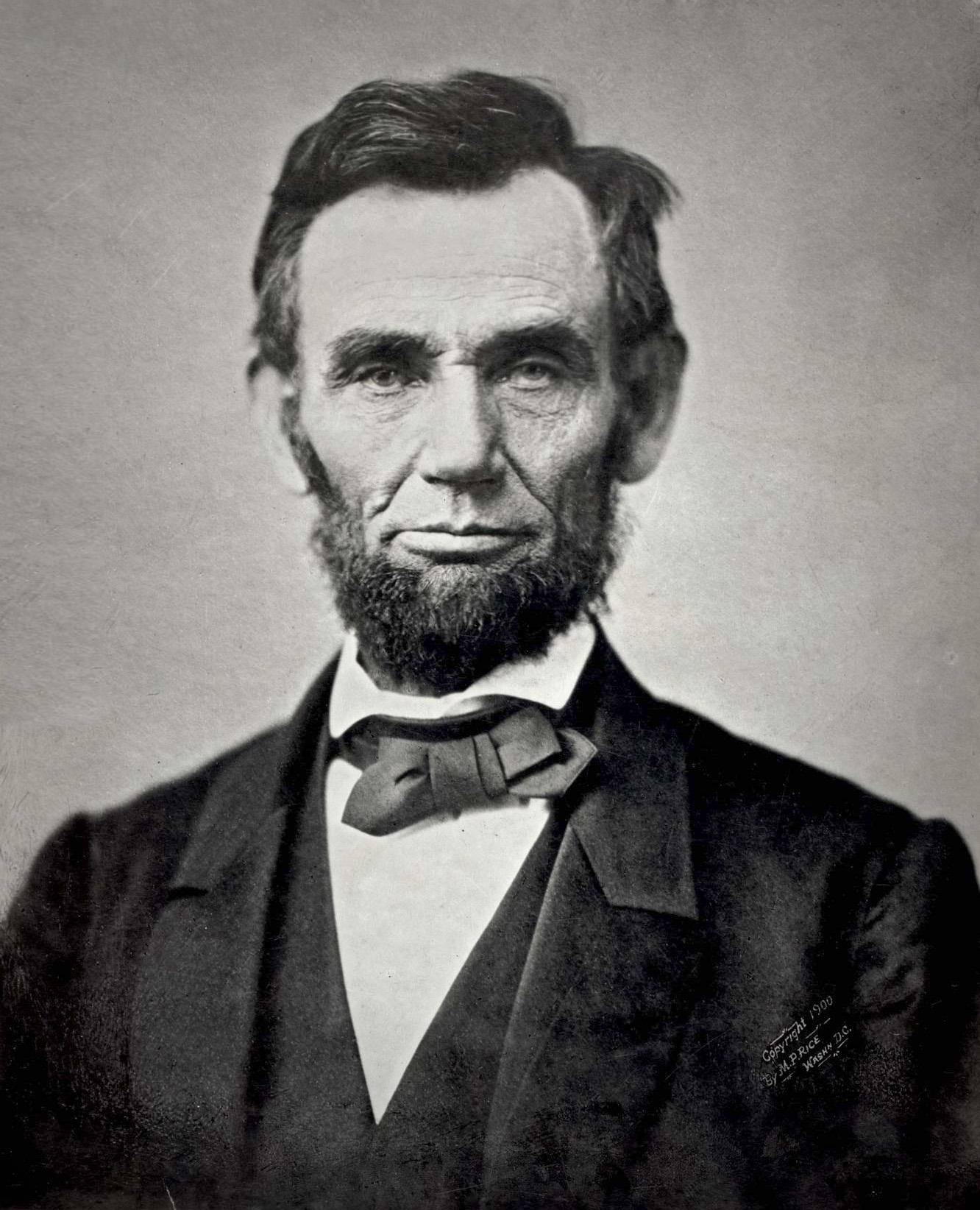
A Racist, a Tyrant, a President: Lessons from President Lincoln


 Hero or Tyrant?

Today we celebrate the lives of those men that hold the highest political office of the land. Unfortunately there is little to celebrate about any of these men. They have done little of good and much evil. Some may disagree with this thesis, but I submit they are not looking at the reality of the situation. Recent presidents are easy targets. Obama and Bush have spied on most everyone and dropped bombs on innocent people in Yemen, Pakistan, and Iraq. It is some of the presidents further back who tend to have a larger illusions of grandeur. In particular, Abraham Lincoln.

Often in polls President Lincoln comes out as the favorite or “best” president. Lots of people think of him as a “founding father” even though at the time of the American Revolution he was still 30 years from being a twinkle in his mother’s eye.  He is praised because he “freed the slaves” and “liberated the south.” Not only is this not true, it is almost the opposite of true. Abraham Lincoln was a racist tyrant, who let power corrupt him, as it inevitably does.

Before I delve further, let me say that this article is in no way a promotion of slavery or even the south and the confederacy. Slavery is an incredibly evil system and wrong. What this article is about is the cult of Abraham Lincoln which is both misinformed and harmful.
To start, let us consider a few examples. A group of boys are building sandcastles. There are multiple groups of boys all working on different sandcastle. They decide to all get together and put all their sandcastles in an unified system with one giant sandcastle in the middle. One boy is chosen to be the “head engineer” of the project.

After some time, one group of boys decides they do not like how the giant sandcastle project is going and disconnect theirs from the group, focusing on their own once more. What would be the correct action of the “head engineer”? Get a stick and beat the boys who do not want to work with them until they cooperate? Of course not, no parents would promote that. The correct thing would maybe be talk to them and try to reason with them. So why when we change sandcastles for government, attacking, sending armies and guns suddenly becomes okay?

This is exactly what Abraham Lincoln did. He was the leader of this group of sandcastles that were united under the constitution. The government of South Carolina felt the U.S. government had breached the contract, so they hopped out. There is nothing inherently wrong with this. If you make a contract with someone and they don’t uphold it, you are under no obligation to stay in that contract. This is common law.

If you offer a subscription service and you stop delivering magazines or whatever you sell, you cannot go to that person’s house and stick a gun at their head and tell them they have to keep paying. If you did, everyone would recognize that as wrong and evil. Yet when Abraham Lincoln does just that, sending armies, causing the deaths of hundreds of thousands of people in order to keep power and force people into his contract, he for some reason is praised as a hero. This is incredibly wrong and destructive.

The war was not over slavery. Period. The notion is somewhat ridiculous. Slavery was legal and practiced in the north. To say that Abraham Lincoln attacked the South to end slavery is so ridiculous it is laughable. This would be equivalent to if California decided to leave the union today and the U.S. government deployed an army to bring them back and then saying it is a war to end pornography because California produces pornography. That is absurd because Pornography is legally produced in many states, to say the government is attacking California to end pornography after it leaves the union is clearly manipulation. The government is attacking them to maintain power over them, to continue bringing in their tax revenue. It has nothing to do with morality. The same was the case with the North. They attacked to maintain power. That is all.

“I have no purpose directly or indirectly to interfere with the institution of slavery in the states where it exists. I believe I have no lawful right to do so, and I have no inclination to do so.”  -Abraham Lincoln before the southern rebellion.

“But Abraham Lincoln freed the slaves!” say many.  No he did not. After a year into the war the north was weary of killing people, often their own family. They were tired of having to pay taxes to fund a war effort. As is the case with all wars, the leaders deceive the public to get them to follow their cause, but when the reality of the war hits, along with its shear, disgusting immorality, the public wants out. People generally do not want to fund the bloody ambitions of tyrants. So what do tyrants do? They search for a moral rallying cry. People do not want to die for power, but they will for justice and virtue.

At this time is when the idea of The Emancipation Proclamation came up. It “freed the slaves” in the South. Interestingly, only in the South, a place that Abraham Lincoln had no control over. However in the areas where he was president, i.e. the north, slavery was still legal. This of course was to not upset the slave-dependent people in the north, while at the same time rallying people to his cause in the name of “ending slavery.” To go back to the pornography example, this would be equivalent to California leaving the union, Barack Obama sending an army to “bring them back” and then when support was waning for his war, sending out a decree that made pornography illegal in California, and so we are fighting to end Pornography! Then what would happen? Pornography producers in New York and Texas would say, “well what about us?” to which Obama would say, “oh no, your fine, just give me your income tax.” Well then clearly the war is not about pornography and Obama no more ended pornography than I have ended taxation. Anyone can see this. Yet Lincoln somehow gets a pass. He is a hero for doing just that. The truth is Lincoln was racist tyrant and cared no more for enslaved blacks than he cared for the shoes on his foot. During the election campaign he said this, “I, as well as Judge Douglas, am in favor of the race to which I belong having the superior position.” He only issued the Emancipation as a political shenanigan to get people to keep giving him money and to keep sending their children to be killed. That is horrendously evil. And yet this man is praised as a hero.


There is plenty more to explore on the evils of Abraham Lincoln, this is just the surface, and I have not gone into much detail, however if you are interested there is plenty more out there, Thomas DiLorenzo’s How Capitalism Saved America and The Real Lincoln are both pretty brutal exposés of a man we have been taught to revere. Similarly The Politically Incorrect Guide to American History and The Politically Incorrect Guide to the Civil War also show sides of the civil war that are generally ignored. But I want to say detail is not needed. We do not need to know the details of Napoleon’s life to know he was not the best guy. Any person that sends men to their deaths to further his own power cannot in my mind be considered a hero or a good guy.  Case closed. But let us just go a bit further to look at some of the results of Lincoln.

The United States is the only country in the Western world that ended slavery with a war. In Brazil they just stopped doing it. Slavery was dying off. However some say that slavery would not have ended, and only Lincoln’s war made it go away, that it paved the way to the 13th amendment that ended slavery. I disagree. Slavery did not really even end.  Black’s in the south were not treated as equals for over 100 years after the war. Some argue that still they are not treated as equals. The result of the Civil war was not emancipation. It was over 100 years of inequality and horrible treatment of blacks based on color of skin.

The greater lesson from Abraham Lincoln is that violence does not end a system of violence. However you try to force it to end with however many guns you have, violence does not end violence. “For never here / Do hatreds cease by hatred. / By freedom from hatred they cease: /This is a perennial truth.” The Buddha declared this hundreds of years ago, and western culture still has not learned it. Violence and force do not change people. Shooting guns and brandishing weapons does not change people, it only kills then or makes them angry and more determined. “So how could society have ended slavery?” The same way it did in the rest the world, the same way we get people to change in our everyday interactions. When we disagree with someone we do not pull out a gun and tell them they have to agree with us. Of course not, that would be crazy. We reason, we attempt to show the superior logic, or most importantly we live in a way that shows the superiority of our ideas. The same thing happened for slavery in the rest of the world. People just stopped doing it. They recognized it was wrong. They stopped buying slave-made products. If no one is buying your product, you go out of business pretty quick. You stop trading in slaves, you stop associating with people who are in anyway associated with slavery. That is how you end slavery. No pressure is more powerful than social pressure.

If we want to change the world, we must change ourselves. No number of guns will do it, even if your name is Abraham Lincoln.

Thursday, November 8, 2012

An open letter to conservatives (Part 3): What the GOP must change to be viable


The Republican Party has some major problems. Isolating voters, branding, inconsistency, and hypocrisy come to mind. These 6 changes need to happen for them to become viable, without losing their true principles. What is more, this will bring them more in line with constitutional principles.

6 things (discussed below): a rational foreign policy, a rational immigration policy, a reasonable approach to climate change and the environment, a more accepting and federalist approach to social issues, real fiscal conservatism, and learning to negotiate and compromise.

1.      A rational foreign policy. The Republican Party must adopt a rational foreign policy. For too long the party has supported fighting wars of aggression oversees and spend valuable tax dollars bombing civilians and propping up foreign dictators. The party that was voted got us out of Vietnam and Korea needs to start promoting the kind of foreign policy it used to have and that George Washington suggested: worry about problems here at home, and not in Europe or anywhere else. Looking back on history the sad truth is that despite our often good intentions, the United States’ involvement in oversees conflicts has led to wasted lives and turmoil in those country. Afghanistan (the first time), and central and south America have been evidence of that. Can we say we are pro-liberty while propping up dictators oversees who happen to be our friends? Can we say we are pro-life when we kill thousands of innocent civilians? Our people are needlessly dying, as are those of other foreign countries, it is time for the GOP to take a rational approach to this issue. Yes we need a strong national defense, but we don’t need to be oversees building other people’s bridges, when we have bridges here that need fixing. We already spend over 4 times any other country on military. When will it stop? More money on military makes us safer as more money on education makes us smarter. It doesn’t. Yes there needs to be an investment, but we need to be rational, endless foreign wars of aggression is not the answer. We should focus on working with Democrats to bring the troops home, close oversees bases to save money, and in general downsize the military focusing purely on defense, not offense.

2.      A rational immigration policy. This election made it clear, the republicans need Latinos. What is more, Americans need Latinos. It is time the Republican party take a more open approach to immigration by realizing immigration is a good thing. Once again this is more aligned with conservative principles of Liberty and Life. Why can’t we let people freely move here? If we believe in Liberty we must. I don’t want this to come across wrong, but it is essentially the same principle as free-trade. If they can do a better job for a better price, why not let them do it, that will drop the cost for everyone, and free workers up to be able to do things where they can benefit more people. Obviously we can take a hard line on illegal immigration, but fences are just ridiculous, communist countries build walls and fences, not free countries. Most illegal problems would be solved by making legal immigration (at least a work-visa situation) easy and cheap. Anyone who wants to come should be able to with a nominal fee and background check. Then we can truly live the saying on the statue of liberty: “Give me your tired, your poor, your huddled masses yearning to breathe free.”

3.      Rational approach to the environment and climate change. Accept the Science. Republicans cannot deny it, and should not as it will only make them come across and bigoted and anti-intellectual. That is an image the Republicans desperately need to shake. Republicans should be the party of intellect and education. The message needs to be one of truth, and therefore accept what science is accepting as fact. Climate change and global warming are real, why any politician would or should deny this is beyond me. Now the causes of climate change are not so clear, and how much man has played a part. There are clear signs that lots of it is our fault. And I don’t think anyone would deny that being environmentally conscience is a good thing. We can accept it is real, and recognize it is up to individuals mostly to make changes. Companies and individuals are doing this voluntarily and it will continue, we ought to be encouraging this, as that is what we want, less government, more people. Also stats could be encouraged to work out their own particular environmental policies to encourage a clean future for everyone. In general have a genuine and honest discusion about what, if anything, the federal government could/should do to change anything.

4.      On social issues, focus on federalism. Here is another inconsistency and hypocrisy that sends people packing from the GOP. We want freedom, yet we want to tell people in other states about their personal lives and what they can consume. There is a logical approach to this that does not alienate social conservatives and is more in line with principles of liberty than even the libertarian view (in my opinion) it is called federalism, I wrote an article on it here. This should be our approach. Also on LGBTQ issues, if we adopted a fair tax, or closed loopholes and benefits in the tax code, then gay marriage would not be such a big issue. At that point it literally becomes about the definition of a word. That could easily be left to the states to hash out, other words change meaning from New York to Texas, I don’t see why this word couldn’t either, as long as we eliminate the tax code loopholes and benefits that benefit people living in a married relationship.

5.      Be real fiscal-conservatives. The supposedly “fiscally conservative” party has been anything but in recent years. George W. Bush out spent and out-debted his democratic predecessor by a pretty unhealthy margin, and we wonder why people can’t identify with the party? If we actually pursued this principle half as hard as we doggedly pursue keeping “our guys” in office we would be doing pretty well. This is a branding issue. This should be our brand: true fiscal conservatives. Most Americans identify with the need to keep a budget; it is something Republicans should be able to deliver.

6.      Learn to negotiate. If we have the truth, we should be willing to talk to anyone and not fear. We shouldn’t have to shut people out of debates or speeches, especially one of our own. Let’s recognize that the other side has legitimate reasons to believe why they do and engage them in constructive conversation. Let’s learn to compromise, if it means raising taxes on the super-rich for significant spending cuts, why not? A lot could be negotiated with things we should not even be defending, like military cuts, cuts in foreign aid, closing loopholes for corporations, and more.

These changes will not only widen the appeal of the GOP. They are more aligned with core principles of life, liberty, and love. We do not need to abandon our principles to win, we need to abandon the principles of the few crazies who have captivated the party and mistaken their social agenda for constitutional principles, when they are not. The party needs to rebrand itself not as the anti-intellectual, anti-immigrant, white party, but as the intellectual, rational, fiscally-conservative, open-minded party. If some inside the party get mad, those people will just have to realize what the party is about.

Life, Liberty, and Love: these should be our guiding principles. Following the constitution could go a long way, especially for Republicans.

Wednesday, November 7, 2012

An open letter to conservatives (Part 1): why the election does not matter, but you do.

As was inevitable Tuesday night, half of the country felt elated, while half were overwhelmed with a wave of depression, anxiety, and ulcers. I also fell into this emotional whirlpool despite my attempt to distance myself from it by voting third party. Secretly, deep down somewhere, I really hoped Mitt Romney would come out victorious, even if it was just to prove some pollsters wrong. Furthermore some of the local races didn’t go my way either. And so gloom surrounded me.

I began analyzing these feelings and had to slap myself, as should the rest of Conservadum. Was I a different person because of the outcome of the election? Were the people of the United States any different? NO! We are the exact same people as we were Tuesday night at 6 p.m. as we were at 10 p.m. We were personally no more “losers” than the other guys were “winners." So why were so many depressed then? The reason is because we believed a false idea completely contrary to the ideas of liberty: that government can solve our problems.

The questions we have to ask ourselves is whether we are personally more independent? Are we personally more capable of being free from government than we were before? Are we more capable of helping our fellow man? 

These are the question that matter, not who for whom we will vote.

The sooner conservatives realize that liberty will not come from spending millions on TV adds to try and get someone elected, the better. Liberty will come when those millions are instead spent on private charity to help people get food, job training, and health care. That is when liberty will come, when the American people stand up and show that we can do it, and we can do it without government. This is our fight for winning. If you truly believe in liberty’s message, you understand that people solve problems, not government. That means while others are petitioning government, and spending money to get government to do something about problem X, we should be out actually doing something about problem X.
In reality a Mitt Romney win would have been just as false as this supposed loss. If he had won would people have understood liberty any more than they do now? Would people be any different, depend on government any less than they do now? NO! Simply advertisements and publicity got them to vote for Mitt Romney for being slightly better (often for reasons not having anything to do with real principles) better than Barak Obama. It is not like anyone would have come to understand truth any better, and that is what matters.

The battles for America’s future will not happen at the ballot box. Forget all that junk Sean Hannity and Rush Limbaugh say about this being the most important decision of our lives. It is not, it was not, it never will be. The most important decisions of our lives are decisions to tell the truth even though it is advantageous to lie, decisions to live our beliefs, even when it would be convenient to forget them, decisions to live morally, to serve others, and be good citizens. Those are the decisions that matter; those are decisions that actually change people’s minds, decisions that truly help people understand liberty. Our decision to help our neighbors read, and volunteering at schools, and sharing the great books of history does more to influence America’s future than any decision you will ever make at the ballot box.
               
Elections follow automatically if the principles of honesty and liberty are being practiced in homes and communities. The people get the leaders they deserve. If we want to change America, we need to change ourselves. We need to live independently, we need to live charitably, and compassionately, we need to love all people regardless of race, religion, ethnicity, sexual-orientation, or whatever else. The principles of liberty can only survive if we have an honest, hard-working, and indeed loving people. If we don’t become those people, we can never win.
               
As we become those people and work on converting people to Liberty and Truth, and not Mitt Romney, or whoever else, we will win. People will see the difference and know the truth. We can be better every day. We can become more educated and search for truth in everything. If we spend our time understanding truth, instead of arguing over personalities and trivialities, we will win.
               
It is ours to win, but it takes a people who are dedicated to living honestly and justly every day of the year, not just on Election Day. People who believe government can solve all of our problems ask for your vote. People who believe in Liberty ask much, much more, they ask for your life and your responsibility. This is not an easy task, but it is possible.

The election should simply be a thermometer of where we are, and why spend millions changing the thermometer? We should spend our time and effort changing what it is measuring, and it is measuring ourselves.
               
The long and short is this: Truth will win if we stand up and live truth, if we shun government entitlements at all costs, and embrace independence, philanthropy, service, and charity. Love is the most powerful force on this earth, if we employ it on our side, we will win, if we don’t, we will lose. It really is all about love, conservatives need to realize that and live it. That is their only hope.