Monday, February 17, 2014

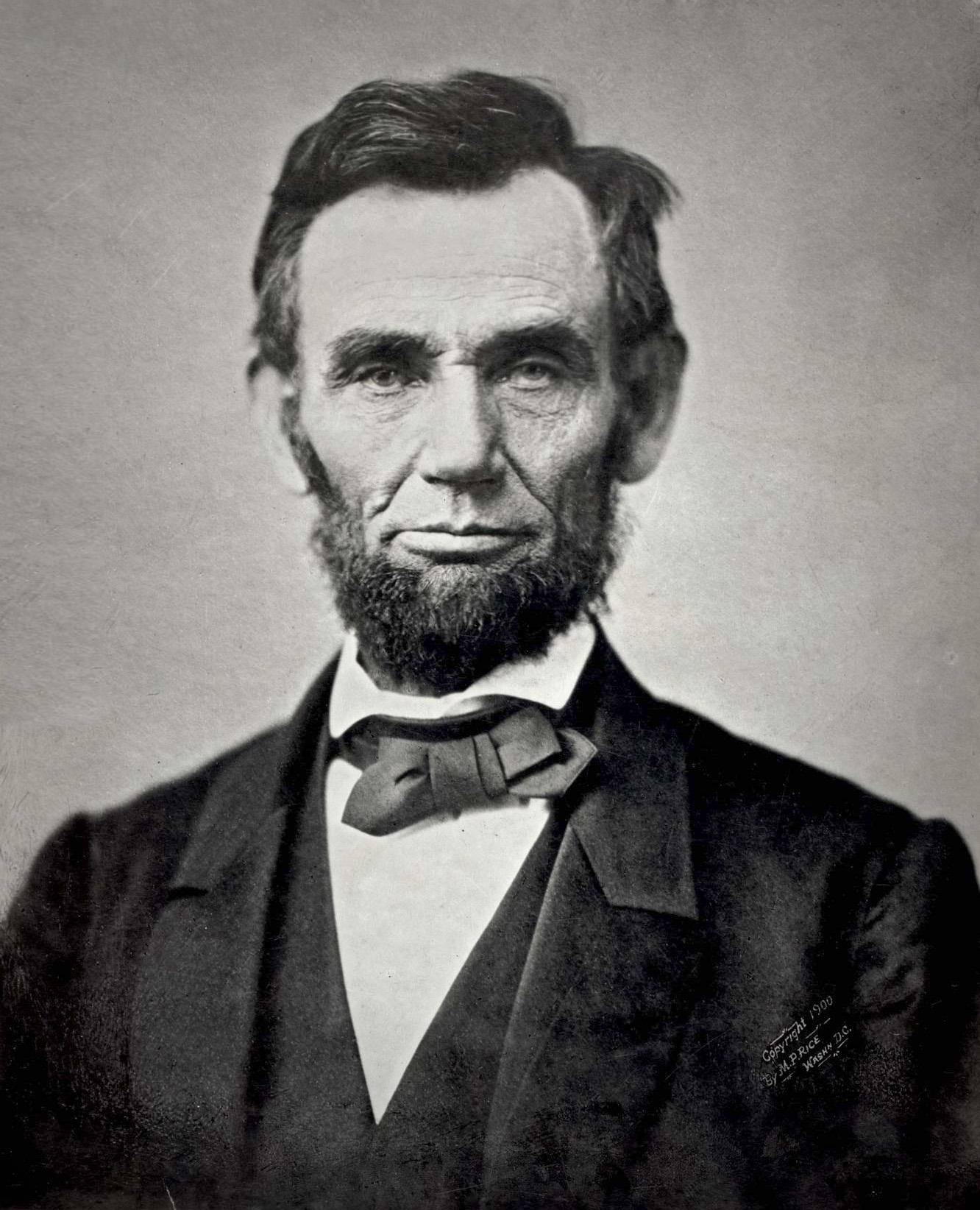
A Racist, a Tyrant, a President: Lessons from President Lincoln


 Hero or Tyrant?

Today we celebrate the lives of those men that hold the highest political office of the land. Unfortunately there is little to celebrate about any of these men. They have done little of good and much evil. Some may disagree with this thesis, but I submit they are not looking at the reality of the situation. Recent presidents are easy targets. Obama and Bush have spied on most everyone and dropped bombs on innocent people in Yemen, Pakistan, and Iraq. It is some of the presidents further back who tend to have a larger illusions of grandeur. In particular, Abraham Lincoln.

Often in polls President Lincoln comes out as the favorite or “best” president. Lots of people think of him as a “founding father” even though at the time of the American Revolution he was still 30 years from being a twinkle in his mother’s eye.  He is praised because he “freed the slaves” and “liberated the south.” Not only is this not true, it is almost the opposite of true. Abraham Lincoln was a racist tyrant, who let power corrupt him, as it inevitably does.

Before I delve further, let me say that this article is in no way a promotion of slavery or even the south and the confederacy. Slavery is an incredibly evil system and wrong. What this article is about is the cult of Abraham Lincoln which is both misinformed and harmful.
To start, let us consider a few examples. A group of boys are building sandcastles. There are multiple groups of boys all working on different sandcastle. They decide to all get together and put all their sandcastles in an unified system with one giant sandcastle in the middle. One boy is chosen to be the “head engineer” of the project.

After some time, one group of boys decides they do not like how the giant sandcastle project is going and disconnect theirs from the group, focusing on their own once more. What would be the correct action of the “head engineer”? Get a stick and beat the boys who do not want to work with them until they cooperate? Of course not, no parents would promote that. The correct thing would maybe be talk to them and try to reason with them. So why when we change sandcastles for government, attacking, sending armies and guns suddenly becomes okay?

This is exactly what Abraham Lincoln did. He was the leader of this group of sandcastles that were united under the constitution. The government of South Carolina felt the U.S. government had breached the contract, so they hopped out. There is nothing inherently wrong with this. If you make a contract with someone and they don’t uphold it, you are under no obligation to stay in that contract. This is common law.

If you offer a subscription service and you stop delivering magazines or whatever you sell, you cannot go to that person’s house and stick a gun at their head and tell them they have to keep paying. If you did, everyone would recognize that as wrong and evil. Yet when Abraham Lincoln does just that, sending armies, causing the deaths of hundreds of thousands of people in order to keep power and force people into his contract, he for some reason is praised as a hero. This is incredibly wrong and destructive.

The war was not over slavery. Period. The notion is somewhat ridiculous. Slavery was legal and practiced in the north. To say that Abraham Lincoln attacked the South to end slavery is so ridiculous it is laughable. This would be equivalent to if California decided to leave the union today and the U.S. government deployed an army to bring them back and then saying it is a war to end pornography because California produces pornography. That is absurd because Pornography is legally produced in many states, to say the government is attacking California to end pornography after it leaves the union is clearly manipulation. The government is attacking them to maintain power over them, to continue bringing in their tax revenue. It has nothing to do with morality. The same was the case with the North. They attacked to maintain power. That is all.

“I have no purpose directly or indirectly to interfere with the institution of slavery in the states where it exists. I believe I have no lawful right to do so, and I have no inclination to do so.”  -Abraham Lincoln before the southern rebellion.

“But Abraham Lincoln freed the slaves!” say many.  No he did not. After a year into the war the north was weary of killing people, often their own family. They were tired of having to pay taxes to fund a war effort. As is the case with all wars, the leaders deceive the public to get them to follow their cause, but when the reality of the war hits, along with its shear, disgusting immorality, the public wants out. People generally do not want to fund the bloody ambitions of tyrants. So what do tyrants do? They search for a moral rallying cry. People do not want to die for power, but they will for justice and virtue.

At this time is when the idea of The Emancipation Proclamation came up. It “freed the slaves” in the South. Interestingly, only in the South, a place that Abraham Lincoln had no control over. However in the areas where he was president, i.e. the north, slavery was still legal. This of course was to not upset the slave-dependent people in the north, while at the same time rallying people to his cause in the name of “ending slavery.” To go back to the pornography example, this would be equivalent to California leaving the union, Barack Obama sending an army to “bring them back” and then when support was waning for his war, sending out a decree that made pornography illegal in California, and so we are fighting to end Pornography! Then what would happen? Pornography producers in New York and Texas would say, “well what about us?” to which Obama would say, “oh no, your fine, just give me your income tax.” Well then clearly the war is not about pornography and Obama no more ended pornography than I have ended taxation. Anyone can see this. Yet Lincoln somehow gets a pass. He is a hero for doing just that. The truth is Lincoln was racist tyrant and cared no more for enslaved blacks than he cared for the shoes on his foot. During the election campaign he said this, “I, as well as Judge Douglas, am in favor of the race to which I belong having the superior position.” He only issued the Emancipation as a political shenanigan to get people to keep giving him money and to keep sending their children to be killed. That is horrendously evil. And yet this man is praised as a hero.


There is plenty more to explore on the evils of Abraham Lincoln, this is just the surface, and I have not gone into much detail, however if you are interested there is plenty more out there, Thomas DiLorenzo’s How Capitalism Saved America and The Real Lincoln are both pretty brutal exposés of a man we have been taught to revere. Similarly The Politically Incorrect Guide to American History and The Politically Incorrect Guide to the Civil War also show sides of the civil war that are generally ignored. But I want to say detail is not needed. We do not need to know the details of Napoleon’s life to know he was not the best guy. Any person that sends men to their deaths to further his own power cannot in my mind be considered a hero or a good guy.  Case closed. But let us just go a bit further to look at some of the results of Lincoln.

The United States is the only country in the Western world that ended slavery with a war. In Brazil they just stopped doing it. Slavery was dying off. However some say that slavery would not have ended, and only Lincoln’s war made it go away, that it paved the way to the 13th amendment that ended slavery. I disagree. Slavery did not really even end.  Black’s in the south were not treated as equals for over 100 years after the war. Some argue that still they are not treated as equals. The result of the Civil war was not emancipation. It was over 100 years of inequality and horrible treatment of blacks based on color of skin.

The greater lesson from Abraham Lincoln is that violence does not end a system of violence. However you try to force it to end with however many guns you have, violence does not end violence. “For never here / Do hatreds cease by hatred. / By freedom from hatred they cease: /This is a perennial truth.” The Buddha declared this hundreds of years ago, and western culture still has not learned it. Violence and force do not change people. Shooting guns and brandishing weapons does not change people, it only kills then or makes them angry and more determined. “So how could society have ended slavery?” The same way it did in the rest the world, the same way we get people to change in our everyday interactions. When we disagree with someone we do not pull out a gun and tell them they have to agree with us. Of course not, that would be crazy. We reason, we attempt to show the superior logic, or most importantly we live in a way that shows the superiority of our ideas. The same thing happened for slavery in the rest of the world. People just stopped doing it. They recognized it was wrong. They stopped buying slave-made products. If no one is buying your product, you go out of business pretty quick. You stop trading in slaves, you stop associating with people who are in anyway associated with slavery. That is how you end slavery. No pressure is more powerful than social pressure.

If we want to change the world, we must change ourselves. No number of guns will do it, even if your name is Abraham Lincoln.

Thursday, January 16, 2014

Thursday, March 7, 2013

Leaf in the Wind


As the wind blows in the west
And trees grow up in a sunny glow
On dark paths, though I tread
I shall return to Thee, my Lord

                 Far off in the distant hills, where now travelers seldom journey, there grows a mighty oak tree, a pillar sticking out against its surroundings of grass and sage. A wash rolls next to the oak in early spring, but quietly disappears as the hot sun of summer dries the mostly exposed earth.
                Through some miracle of nature, one year when the rains and sun were just right, somehow the oak seed managed to take root in the wet soil while water was still abundant, and began its great journey of life, which began with no man recording it, and has lasted longer than for any man to note its end.
                One bright, glowing spring, the tree emerged from its winter slumber, with sprouts of green leafs coming forth at every angle and on every branch to soak in the warm bath of sunlight.
                They grew quickly in the idealistic conditions, all eager to enjoy the plenty the sun had to offer. They felt the glow and enjoyed the tingle of the wind rustling between them, with the companionship of hundreds of other leaves talking and moving around them. It truly was a bustling spring, with all sorts of life in the air, unfolding as a sublime dance in the sky and earth, tree, grass, and water.
                Yet there was one leaf which opened slowly and weak. When he finally emerged, he was curved and did not move easily in the wind like the others, but he kept growing and straightening. Soon, he stretched the tips of his green veins to their full length and could bath fully in the sunlight. He had missed some of the most radiant days of spring, but was determined to enjoy it no less. Perched near the top of the tree, he could see far the grasses making their wistful patterns in the evening wind, and the water tumbling in its dynamic formations. At his height the stronger winds allowed him to flip and flutter with more eagerness than all those around him.
                Leafs near enjoyed his company and good-nature, and they played and danced together. One leaf, that was slightly below and easily visible by him, particularly enjoyed his constant motion, and together they flickered sun towards each other in a golden dance of rays.
                Quickly though, the liveliness of spring swept into the dryness of summer, and some leaves wearied of the golden sun and windy dance. Some even fell quietly to the ground, leaving the sun and wind for the cooler, shade-filled ground.
                But not the leaf near the top of the tree. He still bathed in the sun and loved to dance. Some of his friends were gone, but most stayed. They did not dance as much as he, but once in a while, when the wind was just right, he could get them to. And the leaf just below, his favorite, still flickered back messages in the resplendent sun, and together they made music of light and green.
                The months rolled on and with each new summer day, more leaves dried and fell. When a rainstorm finally did come, it was not the exciting time as before, but a drudgery to be past. Except for a few, like the leaf at the top for the tree, who swayed gleefully with each new drop.
                But the rains grew colder and nights longer and leaves began to change color more and with each change of color, more drifted gracefully to join the others on the grassy ground. Soon most all his friends had left, and one day, even his friend just below made a last glimmer of her now yellow surface, then broke off, going back and forth in the air, as if waving an unwilling farewell to the friend above, and finally landing, joining old friends on the soft earth.
                He almost fell as well, in an attempt to catch that last joyous beam, to try and hold on to that brilliant glimpse which seemed so deeply burned into him. But he couldn’t. He didn’t. He held on, whirling in the wind.
                In the early evenings, though much colder, the wind spiraled around his now dry, and yellow-brown self, and for a moment he remembered those few spring days when the beautiful beams of the sun and moon glimmered and the warmth and light of life all around filled the grasses and the air completely.
                Then the wind would stop, night filled the atmosphere, and the chill air enveloped him. The memories of moments before would fade into the darkness of night.
                Shortly, snow fell and the few remaining leaves fell with it. Still the leaf near the top of the tree held on, the lone leaf, in a lone tree in a gray field of white. He saw his friends on the distant ground, including his golden friend, just before the snow comforter covered them.
                The snow piled high, and continued to stack up, yet the leaf held firm in the tree in the cold stale air.
                One day a traveler, rare as they are, walked over the small snow-covered hill where the oak tree stood. Looking up into the tree he thought to himself how curious that one leaf alone stood in the top of the tree. Though the man was tired, cold, and eager to return to his distant cabin, the peculiarity of the situation pushed him to take some snow in his hands, form it into a ball, and direct it toward the top of the tree.
                Flying just past the lone leaf, it made the stale air rush around him, and for a moment, the warmth and excitement of the event caused him to remember vague distant memories of sunbeams, dancing grasses, running water, and a leaf flickering back golden beams at him. The emotion and happiness of days gone by engulfed him as he broke from his perch and glided down onto the white plainness below. There he landed as one dark spot on the white background. All his friends feet below, he was alone, cold, and dead in a field of white.
                The traveler was about to trudge on to his cabin before night fell, but looked to the leaf and felt he could almost hear it mumbling a cry to itself, “I cannot ask you for anything, for what am I to you, but I am cold and alone, and impossibly distant from all I have ever known and loved sitting alone in this cold wasteland, because of my desire to dance in the wind.
                The traveler, half smiling, for hearing what perhaps was not there, turned quietly and moved meaningfully towards the lone dark dot. And though the air was getting colder, and the night was settling fast, the man pulled from his pack a small shovel, and began to dig into the pack of snow. Once his hole reached the earth, where grasses and leafs and water had already begun to melt together to create nutrients for new life, the man put the leaf quietly into his hands, looked at it with a smile that showed overwhelming covering sadness and disappointment, then dropped the leaf into the bottom of the hole. The hole was covered, and the traveler hurried on his way.
                The leaf in the wind now lay silently, under the white blanket, finally at peace.
                Standing quietly and firmly in the field, the oak tree still stands out from its surroundings of white, resilient despite sometimes harsh conditions, and grows from the nutrients of the leaves and grasses dancing together with earth and water, just beneath the snow. 

“To everything there is a season,
A time to every purpose under the heaven…
A time to weep, and a time to laugh;
A time to mourn, and a time to dance…”
-Ecclesiastes 3: 1, 4

Tuesday, March 5, 2013

The New Moon Rises, Dark and Stealth


Through the wind and hazy glaze
The New Moon rises dark and stealth
The world around is bleak and gray
With no ray to light the wanderer’s way

Away the sun, Away the moon
The New Moon rises dark and stealth
There is no light, no glory is seen
No hidden quality or golden beam

Yet it is the future, a deep black hope
While the New Moon rises dark and stealth
There is no fanfare, nor honor there
Simply the dark new moon,
                              an empty sky,
                                             and a future so near

The New Moon rises, dark and stealth.

Sunday, March 3, 2013

Ree Reh's Smile


There are few people who I have met that always have a smile on their face. Every time I see Ree Reh, he smiles, gives me a hug, and jokes with me. He will go up and talk to anyone and just start joking and smiling. His smile and good looks are contagious, and makes all those around him smile as well. The interesting thing about his jokes though is that I have never heard them. Ever.
Ree Reh is what I would call one of the ultimate minorities. Maybe he isn’t a Helen Keller, but close.

The Karenni are a minority group in Burma, about 1% of the population (reliable numbers are hard to find). They speak their own language, Karenni, and unlike their cousins the Karen, most of them don’t speak Burmese. They are about 90% Catholic. Burma is about 70% Burmese, and 90% Buddhist.

Because of their Christianity, among other things, they have been attacked, had their villages burned, and forced to flee from their homeland. Via refugee camps, a portion of those million or so Karenni people have made their way to the United States, and a portion of those to Utah. Here in Utah there are about 100 or so Karenni in a state of over 3 million, the only ones that speak their language. Ree Reh is one of them, but he is a small minority of those 100, he is deaf.

When Ree Reh came to America a few years ago he could not read or write any language. He was 14. He could limitedly communicate to his family through signs, who could in turn communicate with approximately 100 or so individuals who could speak Karenni. Needless to say, there was a communication barrier.
Fortunately, through the amazing efforts of people like my brother Andrew, Ree Reh can now read and write English. He can speak American Sign Language decently, and so communicate with an ever growing number of people. And this last Saturday, through holding up his hand next to my brother’s mouth to feel how the air comes out, Ree Reh triumphantly said “How are you?” to my family.

His is a story of optimism and cheerfulness in the face of all obstacles. I would find it difficult to be cheerful if I could not hear and not communicate with most anyone around me, I know this because when I arrived in Uruguay and couldn’t communicate well it was difficult to be cheerful. Ree Reh, however, never stops smiling.
Why someone would want to hurt someone like this, I will never know, and cannot imagine. But just that happened about a month ago, when two 18-20 year olds (who remain unidentified) took to punching Ree Reh in the face and back. One had brass knuckles. And after knocking him partially unconscious, they threw him in the Jordan River, on one of the coldest nights of the year. He had to climb through the snow and over fences, dripping blood along the way to get back to his apartment without running into the “men” (for how could they deserve such a title?). My brother interviewed him about the event and it is on his blog, here (the interview is about half way down, the whole article is interesting though).

The first time I saw Ree Reh, a while after the event, his face was still cut up and his back still had scars. He greeted me with a smile.
This photo was taken last saturday (you can see how quickly he has recovered, see Andrew's blog for pictures just after the incident). Here is messing around with my brother and some friends. He is in the middle in the white t-shirt with blue letters.